

Σε αυτή τη σελίδα
Σε αυτή τη σελίδα
Location and Access
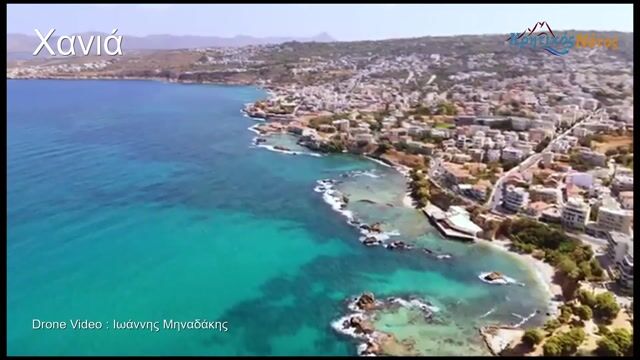
Chania is situated on the north-western coast of Crete, built in an amphitheatre-like formation around the natural harbour and the Bay of Souda. The city stretches from the old town with its historic walls to the modern suburbs and coastal areas. With a population of around 110,000 in the wider area, Chania is the administrative, economic and cultural centre of western Crete.
Chania is easily accessible by air and sea. Chania International Airport “Ioannis Daskalogiannis” (CHQ) is situated in Akrotiri, approximately 15 kilometres from the city centre. The airport handles flights from Athens and Thessaloniki all year round, as well as numerous international flights from European cities during the summer months. From the airport, regular KTEL buses run between the airport and the centre of Chania (every 30–60 minutes), whilst taxis and private transport services are also available.
The port of Souda, 7 kilometres east of the city centre, is one of the largest and safest natural harbours in the Mediterranean. Regular ferry services connect Chania with Piraeus (journey time 7–9 hours depending on the ferry), whilst during the summer months cruise ships also call at Souda. From the port, regular buses and taxis take passengers to the city centre. By road, Chania is connected to Heraklion via the national road (a distance of 140 kilometres, a 2-hour drive) and to Rethymno (60 kilometres, 1 hour).
History – From Kydonia to the Modern Metropolis
The history of Chania spans over 4,000 years. On the site of the present-day city, in the Kastelli neighbourhood, stood ancient Kydonia, one of the most important Minoan cities on Crete during the 2nd millennium BC. Kydonia is mentioned in the Linear B texts from Knossos and in the Homeric inscriptions. Archaeological excavations have uncovered significant Minoan ruins, pottery, tools and evidence of extensive trade with Egypt and the eastern Mediterranean. The city continued to prosper during the Classical, Hellenistic and Roman periods.
During the Byzantine period, the city was known as Chania and was an important episcopal centre. In 824 AD, the Arabs conquered Crete and the city suffered extensive damage. In 961 AD, the Byzantine general Nikephoros Phokas recaptured Crete and the city was rebuilt. In 1204, following the Fourth Crusade and the fall of Constantinople, Crete came under Venetian rule, and Chania became La Canea – one of the most important Venetian strongholds in the Mediterranean.
The Venetian period (1204–1645) was Chania’s golden age. The Venetians transformed the city into a prosperous commercial centre, building imposing walls, fortifications, the harbour, the shipyards (arsenals), mansions, churches and public buildings. The architecture of this era – with its stone arches, narrow vaults, balconies with iron railings, and pastel-coloured façades – still lends Chania its unique Venetian character to this day. The city was an important stop on the maritime trade routes between Venice, Alexandria and Constantinople.
In 1645, after a two-month siege, Chania fell to the Ottoman Turks, who gradually took control of the whole of Crete. Ottoman rule lasted until 1898 and left its own mark on the city. The Turks converted churches into mosques, built minarets and hammams (bathhouses), and incorporated Ottoman elements into the architecture. Despite the revolts and struggles for freedom that took place during the Ottoman occupation, the city remained an important administrative centre.
In 1898, following liberation, the Cretan State was established with Prince George of Greece as High Commissioner, and Chania became its capital. In 1913, Crete was officially united with Greece, and the Greek flag was raised at the Firkas Fortress in the harbour – a moving moment that is still celebrated today. During the Second World War, Chania was heavily bombed by the Germans in 1941, and many buildings were destroyed. After the war, the city was rebuilt and developed as a tourist destination, whilst retaining its historic centre.
The Venetian Harbour – The Heart of Chania
The Venetian Harbour is the very heart and soul of Chania, the city’s most photographed and romantic spot. It was built between the 14th and 16th centuries by the Venetians, with the aim of protecting ships from the winds and waves and serving the commercial and military needs of the Serenissima Repubblica. The harbour is semi-circular in shape, with the famous pier extending out into the sea and ending at the iconic lighthouse.
As you stroll around the harbour, you are surrounded by magnificent Venetian and Ottoman buildings in pastel shades – pink, yellow, orange, light blue – which have been converted into tavernas, restaurants, cafés, bars and small hotels. The façades of the buildings, with their wooden shutters, iron balconies adorned with flowers, and their reflections in the harbour’s waters create a dreamlike scene that looks as though it has been taken from a painting. In the evening, when the lights come on and are reflected in the sea, the atmosphere becomes magical.
On the western side of the harbour lie the Great Arsenals or Neoria – the Venetian shipyards where ships were built and repaired. Of the original 23 neoria, seven survive today: impressive vaulted stone structures with huge arches opening out towards the sea. Some of the shipyards have been restored and now house the Centre for Mediterranean Architecture, cultural venues and exhibitions. Right next door stands the Küçük Hasan Mosque (or Yalı Mosque), a beautiful Ottoman mosque with a dome, built in 1645, immediately after the Turkish conquest. Today, the building is used for cultural events and exhibitions.
On the northern side of the harbour stands the Firkas Fortress, a Venetian fortification that protected the harbour entrance. The fortress is of particular historical significance because it was here that the Greek flag was raised in 1913, symbolising the union of Crete with Greece. Inside the fortress is the Cretan Maritime Museum, which showcases the island’s maritime history from Minoan times to the present day, with exhibits including ship models, naval weapons, maps and artefacts from naval battles. The fortress also hosts summer cultural events, concerts and theatre performances overlooking the sea.
The Lighthouse – The Symbol of Chania
The most iconic landmark in Chania is the lighthouse standing at the tip of the breakwater, at the entrance to the Venetian harbour. The lighthouse was originally built by the Venetians in the 16th century and was one of the oldest lighthouses in the Mediterranean. During the Ottoman conquest, the lighthouse suffered significant damage. In 1839, the Egyptian pasha Mehmet Ali, who was temporarily ruling Crete, rebuilt the lighthouse, giving it its current form. The new architecture combines Venetian and Ottoman elements – the lighthouse resembles a minaret with its octagonal base and cylindrical tower.
The lighthouse is built of limestone in shades of beige and cream, and stands approximately 21 metres tall. You reach it by walking along the pier, a lovely 500-metre stroll with the sea and boats bobbing alongside you. The lighthouse no longer serves as a navigational aid, but remains the most photographed spot in Chania. The sunset from the lighthouse, with the sun sinking into the sea and the colours of the sky changing from orange to pink and purple, is an experience not to be missed – hundreds of people gather every evening to enjoy it.
The Old Town – A Labyrinth of History
The Old Town of Chania stretches around the Venetian harbour and is surrounded by sections of the original Venetian walls. It is an enchanting labyrinth of cobbled alleyways, hidden passageways, arched passageways and unexpected squares that invite the walker to lose themselves in time. Every corner reveals a piece of history – Venetian mansions with coats of arms, Ottoman buildings with wooden balconies, neoclassical façades, Roman fountains, Byzantine churches.
The old town is divided into various historic neighbourhoods, each with its own character. Kasteli is the oldest and highest neighbourhood, built on a hill overlooking the harbour. This was the site of ancient Kydonia and, later, the administrative centre of the Venetians. Archaeological excavations have uncovered Minoan ruins, and the neighbourhood retains a tranquil, aristocratic character with restored mansions and small museums.
Topanas is situated to the west of Kastelli and was the aristocratic neighbourhood of the Venetians. Its name derives from the Turkish word ‘top hane’ (cannon store). Today it is one of the most picturesque neighbourhoods, with narrow alleyways, bougainvillea cascading from the balconies, boutique hotels, artists’ studios, small shops selling handmade jewellery and ceramics, and romantic restaurants. Topanas is ideal for evening strolls, when the lights of the tavernas create an intimate atmosphere.
Splantzia (or Sintrivani) lies to the east of the harbour and was predominantly a Turkish neighbourhood during the Ottoman period. The neighbourhood’s central square, 1821 Square, is a lively square with a large plane tree, cafés, tavernas and bars where locals and tourists gather. Here stands the impressive church of St Nicholas, a church that features both a minaret and a bell tower – a unique architectural feature symbolising the multicultural character of Chania. The church was originally built by the Venetians, converted into a mosque by the Ottomans (hence the minaret), and restored to an Orthodox church after liberation.
The Jewish Quarter (Evraiko) is situated to the west of the old town, near the sea. This is where the Jewish community of Chania lived, a community with deep roots dating back to Byzantine times. The Etz Hayim Synagogue (Tree of Life) is the only surviving Jewish synagogue in Crete, built in the 15th–16th centuries. During the Second World War, the Germans rounded up the Jewish community and wiped it out – 275 Jews were put on a ship that was sunk by bombing. The synagogue has been restored and now serves as a museum and memorial. A visit is deeply moving and serves as a reminder of the city’s multicultural history.
Halepa is situated to the east of the city centre and was the aristocratic quarter of Chania during the 19th and early 20th centuries. Here you will find impressive neoclassical mansions, Eleftherios Venizelos’s house (which serves as a museum), and many buildings that housed embassies during the period of the Cretan State. Halepa retains a peaceful, elegant atmosphere and is a favourite spot for locals to take a stroll.
Sights and Museums
Beyond the harbour and the old town, Chania offers many museums and attractions. The Municipal Market of Chania is an impressive building with a cruciform floor plan, founded in 1913 and inaugurated by Eleftherios Venizelos. Inspired by the market in Marseille, the building forms the ‘heart’ of the local market, with dozens of stalls selling fresh fish, meat, vegetables, fruit, Cretan cheeses, honey, herbs, traditional products and souvenirs. There are also cafés and small tavernas where you can sample Cretan cuisine. The market is open daily and is a vibrant part of local life.
The Archaeological Museum of Chania is housed in the former Franciscan Monastery in the old town and displays exceptional finds from the Minoan, Classical, Hellenistic and Roman periods. The exhibits include Minoan vases, jewellery, tools, seals, terracotta figurines, Roman mosaics and statues. The Historical Archive of Crete and the Byzantine and Post-Byzantine Museum also house important collections that shed light on the history of Chania.
The Municipal Garden is a beautiful green oasis in the city centre, with shaded paths, a children’s playground, a small zoo, and an open-air theatre that hosts summer concerts and events. It is the perfect place to relax after a stroll through the old town.
The Beaches – From the City to Paradise
Chania offers easy access to some of the most stunning beaches in Crete and the Mediterranean. In the town and its immediate suburbs there are organised beaches such as Nea Chora, just 2 kilometres from the centre, with sand, beach bars and tavernas. Agia Marina, 10 kilometres to the west, is a large sandy beach with plenty of tourist facilities, ideal for water sports. Kalathas, at Akrotiri, 10 kilometres from Chania, is a quiet beach with fine sand and shallow waters, ideal for families.
The most famous beaches are further afield but well worth the trip. The Balos lagoon, 60 kilometres from Chania, is an exotic lagoon with tropical turquoise and blue waters, white and pink sand, and shallow waters that warm up in the sun. It can be reached by excursion boats from Kissamos (Kastelli) or by car and a short walk along a dirt track. The view from above, before you head down to the beach, is incredible – it looks like something straight out of a postcard.
Elafonisi, 75 kilometres south-west, is considered one of the most beautiful beaches in the world. It is a small islet connected to the mainland by shallow waters that you can cross on foot. The sand has a distinctive pink colour due to the crushed shells and corals, and the waters are an exotic shade of turquoise and azure. The beach is a Natura 2000 protected area and offers basic facilities (sun loungers, a beach bar).
Falassarna, 60 kilometres to the west, consists of a series of large sandy beaches with crystal-clear waters and stunning sunsets. The area is popular with windsurfers and kitesurfers when the wind is blowing, but it also offers peaceful moments in vast, open spaces with pristine sand.
The Samaria Gorge
The Samaria Gorge, 43 kilometres south of Chania in the White Mountains, is the longest gorge in Europe and one of the most thrilling hikes in the Mediterranean. The gorge is 16 kilometres long (from Xyloskalo on Mount Omalos to Agia Roumeli by the sea), with its narrowest point, the ‘Gates’ or ‘Portes’, being just 3–4 metres wide, with walls rising 300 metres on either side. The hike takes 5–7 hours depending on your pace, and you’ll pass through stunning scenery featuring sheer cliffs, cypress and pine forests, streams, and rich flora and fauna. The gorge is a National Park and a protected area, home to the Cretan wild goat (kri-kri), a rare species found only on Crete.
The walk begins at Xyloskalo (altitude 1,250 metres), where you descend a steep wooden staircase with breathtaking views. As you continue, the path follows the stream; you pass through the abandoned village of Samaria, cross the Portes – an experience that makes you feel very small – and ends up at Agia Roumeli, a small seaside village where you can go for a swim and catch a boat back to Hora Sfakion or Sougia. The gorge is open from May to October (weather permitting) and the entrance fee is 5 euros.
Cretan Cuisine in Chania
Chania is a paradise for lovers of Cretan cuisine. The area is renowned for the authenticity of its food, its fresh local produce and its traditional tavernas. Try the boureki – pies filled with courgette, potato and mizithra, which are a typical dish of Chania. Kalitsounia – small pastries filled with mizithra or greens, served either savoury or sweet with honey. Sfakian pie – a thin flatbread topped with mizithra and honey, a distinctive local delicacy that combines savoury and sweet flavours.
Staka – a spread made from butter and goat’s cheese, served with pilaf or eggs – is a speciality of western Crete. You should also try ‘chochliou boubouristou’ (fried snails with salt and oregano), ‘antikristos’ lamb (slow-roasted lamb), apaki (smoked pork), and of course the classic dako with tomato, mizithra and olive oil. Cretan cheeses – graviera, anthotyros, xynomizithra – are exceptional, especially when accompanied by local raki and wine.
For authentic Cretan cuisine, visit the traditional tavernas in the old town or in the surrounding villages such as Therisos, Alikianos and Lakkoi. The tavernas in the villages often serve their own produce – vegetables from their gardens, oil from their olive trees, meat from their flocks. The hospitality is warm and the experience authentic.
Practical Tips
The best time to visit Chania is in spring (April–June) and autumn (September–October), when the weather is pleasant (20–28°C), there are fewer tourists and prices are lower. In summer (July–August) it is warmer and busier, but offers a livelier atmosphere and ideal conditions for the sea and beaches.
For accommodation, the old town is the best choice for a romantic atmosphere and proximity to the sights. There are boutique hotels in restored Venetian buildings, traditional guesthouses and Airbnb flats. The seaside suburbs (Platanias, Agia Marina) are best suited to families who want to stay close to the beach. Prices range from €50–80 per night for mid-range accommodation up to €150+ for luxury accommodation.
The centre of Chania is compact and easy to get around on foot. To explore the prefecture, the beaches and the Samaria Gorge, we recommend hiring a car. There are also organised excursions by bus or boat to the main destinations.
Chania is a city that wins you over at first sight and keeps you captivated forever. Whether you lose yourself in the alleyways of the old town, watch the sunset from the lighthouse, savour a Sfakian pie with honey, or swim in the tropical waters of Balos, Chania will remain etched in your heart – the most beautiful city in Crete, where history, beauty and life come together at every turn.
Video
Tik-tok :https://www.tiktok.com/@johnminad
Instagram : https://www.instagram.com/giannis_mndks
Video Gallery